

A European Example of Sustainable Tourism and Rural Economy
Regional Park of Sierra Espuña is the only protected natural area in Murcia that enables slow tourism and provides a way to sustain the local economy and commerce. It holds the European Charter for Sustainable Tourism, which requires a voluntary commitment undertaken by local businesses.
Swisscontact Explains Sustainable Tourism
This video explains a real and current challenge. It presents the example of a rural resident who, faced with the difficulty of finding employment in a rural area, is forced to seek solutions to ensure the economic growth of his village and improve services for visitors. The proposed solution is sustainable tourism.
Swisscontact Explains Sustainable Tourism
This video explains a real and current challenge. It presents the example of a rural resident who, faced with the difficulty of finding employment in a rural area, is forced to seek solutions to ensure the economic growth of his village and improve services for visitors. The proposed solution is sustainable tourism.
Benidorm Is Sustainable Tourism: A Smart Destination That Inspires Us
Benidorm is a relatively small city with around 150,000 people during the low season, a figure that rises to nearly 400,000 during the high season. It is a sustainable city, despite being the third city with the highest number of overnight stays, which helps generate employment throughout the year.
From an environmental perspective, the city has a maritime-terrestrial natural park and manages the water cycle efficiently to avoid waste, reusing water for irrigation, street cleaning, and local agriculture.
Most journeys within the city are made on foot, which also contributes to its sustainability model.
Valencia Presents the Keys to Sustainable Tourism
A success story from Vivood Landscape Hotel, a hotel located inland in Alicante. Tourists are increasingly seeking disconnection and relaxation, and this hotel has successfully undergone a major digital transformation.
One of the key factors has been improved coordination and communication between employees and departments, together with the personalisation of the guest experience before, during, and after the stay.
The Digitalisation of Guest Happiness
Digitalisation, creativity, inclusion, and cultural heritage are some of the key pillars of sustainable tourism. The new tourist is more aware of the need to make changes in order to slow climate change and, through their mobile device, is able to access information and a wide range of services.
In addition, a smart destination is one that is able to build strong partnerships between tourism businesses and local residents.
Success Story of Vodafone: Hotel Thalasia, a Benchmark in the Digitalisation of Tourism
Thalasia Costa de Murcia is located in the Mar Menor area and is strongly associated with wellness and health tourism. Digitalisation is essential to its business model, with more than 80% of its bookings made online.
The hotel gathers customer information from the very beginning, including preferences, potential complaints, and booking behaviour, allowing it to personalise the service it provides. It also manages room cleaning operations in real time, improving efficiency and guest satisfaction.
Accelerate the Digital Transformation of Your SME: Hotel Montes Universales
Hotel Montes Universales is located in Albarracín, a town with outstanding cultural heritage and gastronomy. Its surrounding cave paintings are recognised as UNESCO World Heritage sites.
The owner has improved the hotel’s digitalisation, particularly in the area of reservation management. They have also developed their website and strengthened their online presence so that users and potential guests can clearly and transparently understand what the hotel offers.
The hotel also uses smart locks, although the owner highlights the continuing need to improve connectivity and coverage services in rural areas. A major challenge for small tourism businesses is low profitability, as occupancy rates in rural destinations are often lower than in cities, together with limited public services.
Chapter 2. Manuel – 360º Digitalisation
Tourism companies that invested in digitalisation in the past gained a competitive advantage during the COVID-19 pandemic. At Meliá Hotels International, digitalisation has become one of the company’s key competitive strengths.
The company has invested in technologies that allow access to customer data through its website, mobile app, and contact centre in order to understand guest needs at every stage of the journey. Big data, artificial intelligence, digital marketing tools, and a 360º social media strategy have been essential in improving the customer relationship model.
Through a QR system located in hotel rooms, guests can access all hotel services easily and efficiently. The company also uses blockchain solutions to help offset its carbon footprint. Its objective is to build strong alliances among all stakeholders, including customers, employees, investors, residents, and suppliers.
Amanda de Armas, Innovation Technician, Tourism of Alicante
Being recognised as a smart tourism destination requires carrying out a broad and in-depth analysis across the key dimensions of governance, accessibility, innovation, and sustainability. This process must take into account all stakeholders involved in the destination, including citizens, businesses, and tourists, with the aim of achieving the best outcomes for everyone.
Spain Could Become the Most Visited Tourism Destination in the World – RTVE Noticias
Spain could overtake France and become the most visited country in the world. In the first quarter of 2025, Spain received 13 million tourists, representing a 13.8% increase compared with the same period in 2024. Visitors typically stay between 4 and 7 nights, and total tourist expenditure could reach €59 billion.
At the same time, there is a growing need for a more sustainable tourism model in many destinations. In Balearic Islands, overtourism has created difficulties for local residents. Measures introduced there include limiting the number of tourist accommodation places, increasing inspections of illegal holiday rentals, and imposing restrictions on cruise ships and vehicles.
Ecotourism in Asturias
Asturias is a destination with outstanding natural wealth in terms of flora and fauna. Around 67% of all vertebrate species found in Spain can be observed in this region.
In addition, its landscape offers the opportunity to enjoy both mountains and beaches, making it an exceptional destination for nature-based tourism.
Promotional Video: Onís Ecoturismo in Picos de Europa National Park
The video highlights the region’s local products, especially cheese and cider, as well as its natural landscapes, caves, and wildlife.
It also showcases excellent routes for outdoor activities such as hiking and cycling, together with some of the area’s most authentic local traditions and cultural heritage.
Cabañeros National Park Ecotourism: Ecotourism in Spain
Cabañeros National Park, located in the Montes de Toledo, has become the first national park to receive the Ecotourism in Spain designation.
The park offers visitor centres, museums, and information points that explain the natural and cultural value of the area. It also provides routes for outdoor activities and transport itineraries using authorised vehicles.
Scientific Ecotourism Experiences in Spain
Ecotourism contributes to the conservation and protection of biodiversity. There are six Spanish foundations working to defend some of the most important species and ecosystems across the country.
Fundación Aquila, based in Oropesa, develops new captive breeding techniques for some of the most emblematic Iberian eagle species in order to safeguard their survival.
Digital Economy and Tourism: Who Adapts to Whom? (Spotify – Travindy Podcast)
The interviewee runs an SME in Argentina and was able to grow by sharing her digital knowledge with different tourism operators so they could sell their services online, ranging from large travel agencies to small businesses in rural towns.
They designed tourism products so that anyone could easily purchase and book them through any device. Although a great deal of information is now available, the reality is that many small operators in South America still face financial and digital capability limitations, and some remain hesitant to invest in digitalisation.
Travel Sustainably: A New Way to Discover Spain
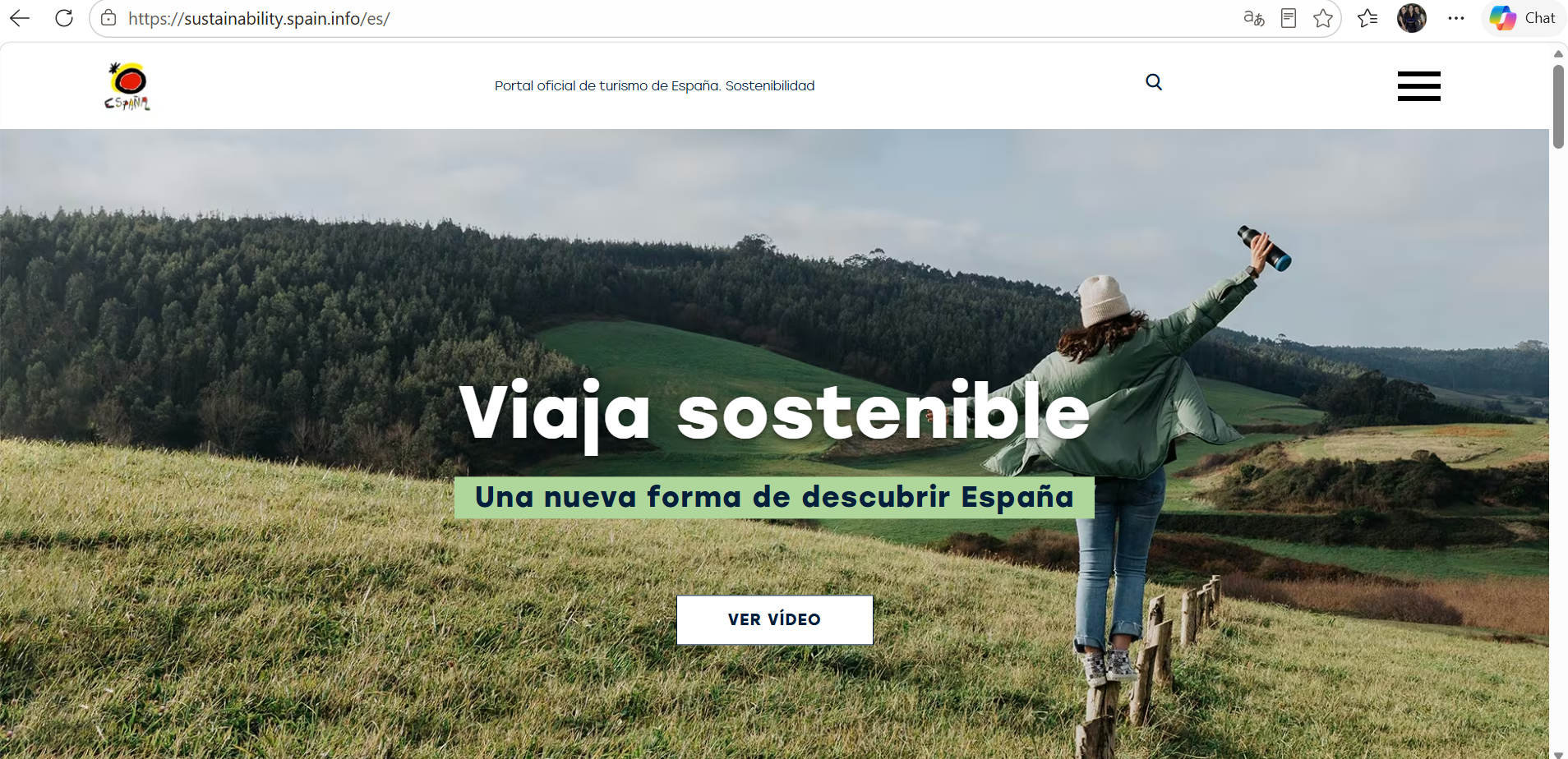
It promotes responsible tourism and recommends ideas and tips for sustainable holidays: reconnecting with nature, taking part in local traditions and culture, and supporting local communities. It also provides guidance on how to be a responsible tourist.
Ministry of Industry and Tourism of Spain: Spain Sustainable Tourism Strategy 2030
The Sustainable Tourism Strategy aims to transform Spanish tourism towards a model of sustained and sustainable growth that enables Spain to maintain its global leadership position.
This model is based on improving the competitiveness and profitability of the industry, protecting natural and cultural values, and ensuring the fair distribution of both the benefits and burdens of tourism.
In addition, the strategy is designed to contribute to the achievement of the Sustainable Development Goals of the United Nations 2030 Agenda.